



CD replication options when you are comparing U.S. and overseas production
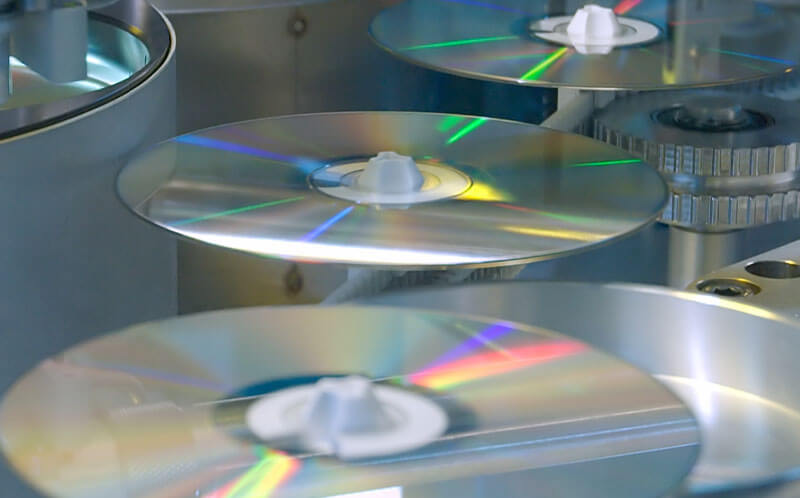
When it comes to CD replication options, you can absolutely manufacture your CDs overseas. People do it every day. But if you're comparing U.S.-based production versus overseas production, the real question you should be asking yourself isn't "which one's cheaper?" Instead, it's "what's the risk, and what's my tolerance for it?"
That cheap overseas CD run you're considering can turn into an expensive nightmare, especially when you add in:
- The time it costs you going back and forth on revisions (not to mention shipping and logistics delays)
- Freight costs you didn't budget for
- Customs, duties, and tariffs you didn't realize were on you to pay
- Packaging that you assumed would match your proof
- A release date that doesn't care that your shipment has been "in transit" for over a month
And while it's true that U.S. manufacturing tends to cost more per unit, it often buys you something that overseas manufacturing doesn't: predictability. In this article, we'll take a closer look at your CD replication options and the tradeoffs involved when you're deciding between U.S. and overseas production.
What you're actually buying (replication vs. duplication)
Before you even start comparing countries, you should compare processes, because the differences can change everything from the price to timeline and compatibility.
CD replication (pressed CDs)
Replication (also known as "pressing") is the traditional CD manufacturing process. A glass master is created and a stamper is made, then discs are molded/pressed from polycarbonate. It's commonly used for larger runs and the setup is more involved.
With CD replication, Disc Makers will mold discs from plastic pellets using a metal stamper that's mounted in an injection mold. This is one reason why it's so cost-effective to have CD replication done for large quantities.
What do we consider "large quantities"? CD replication works best when you have 500 or more units. For fewer units than that, we recommend CD duplication.
CD duplication (burned CD-Rs)
CD duplication involves high quality "burning" to a CD-R. It's better for small runs (less than 500 units) and for when you need a faster turnaround.
Knowing the difference is important when you're comparing U.S. and overseas CD manufacturing because overseas orders are most often discussed in terms of replication (bigger runs). If you're doing anywhere from 100 to 300 units, your best option is duplication.
Unit cost vs. landed cost. vs. life cost
That being said, when people tell you that "CD replication is cheaper overseas," what they're usually referring to is the unit cost. But what they may not tell you is that you also pay other costs too:
Unit cost
The unit cost is the manufacturing cost per disc or package from the plant. Overseas often wins here, particularly at higher quantities.
Landed cost
The landed cost is the total cost to get the product into your hands and ready to sell. It includes manufacturing, but also:
- Freight and shipping
- Insurance (if you choose it)
- Customs, duties, taxes, and fees depending on the terms and destination
- Storage and warehousing
- Re-shipments if anything arrives damaged or incorrect
Customs fees, duties, and taxes are not included in the cost of shipping because each country has its own import rules. Consult local customs for the country you're thinking of ordering from if you'd like more information.
It's also worth noting that international shipments ship D.D.U. (Delivery Duty Unpaid) and the consignee is responsible for duties, taxes, and import charges at delivery.
As you can see, there's no apples-to-apples "U.S. to overseas" comparison for CD replication simply because of the international variables.
Life cost
Let's not forget what it costs you to manage all of this. Things like delays when you're waiting for proofs across time zones, missed merch opportunities (tour dates don't reschedule themselves), emergency reorders, and more will all add up. It's also not something that goes neatly on a spreadsheet, but you can still plan ahead for it.
U.S.-based manufacturing: what you're really buying
Let's take a look at a couple examples of what you're really buying when you manufacture in the U.S., particularly with a vendor that controls more of the process. With quality CD duplication in the U.S., you're getting better speed, faster communication and tighter control.
At Disc Makers, our impressive CD replication turnaround times allow us to deliver more quickly than you might expect because we manufacture every component of your order in our own disc replication and printing plant.
Example benchmarks
Our published production time guide can give you a better idea of what to expect when it comes to domestic CD replication speed:
- Standard production time is around 5–7 days in production, with an extended option around 10–13 days and faster options (priority/rush) for certain packages.
- Some of our packages can be produced in as little as four days (depending on the configuration)
- For duplicated CD-Rs from 100-499 units, our priority services include:
- Rush 1-Day
- Priority 4-days
- Standard 6–8 days
- Economy 10–13 days
The specifics depend on the packaging, but you can use these as a general overview to calculate your specific timeframe needs.
Shipping predictability
Shipping choices are included in quotes for many quantities. We can also ship internationally and with the help of a Product Specialist, we can even handle split shipments. Smaller duplication orders ship via UPS ground and can arrive 1–6 days after production.
As you can see from these numbers, domestic manufacturing often compresses your timeline into a more controllable, manageable window.
When U.S. production is the better option
U.S.-based CD replication tends to win when you have a hard release date, or you're selling at live events. It's also best if you want fast reorders and less lead time risk. If you need frequent updates and proofing or easier recourse in case something goes wrong, U.S. CD replication is your best bet.
Overseas manufacturing: what you're really buying
When you go overseas for CD replication, you're usually getting lower unit cost at higher quantities. This may also mean things like:
- Longer lead times
- More logistics management
- More variable delivery windows
- Potentially higher minimums (depending on the vendor)
Our online Help Center gives you a better idea of how shipping windows can lengthen for international deliveries. UPS may give you a 2–6 day delivery window for international shipping, even if the actual deliveries are faster. Now, multiply that kind of variability across things like:
- Ocean/air freight
- Customs clearance timing
- Port congestion
- Rerouting
And you'll see that your timeline becomes more like a "specific range" rather than a "specific date."
The classic overseas tradeoff
Overseas production is often best for large runs, where your per unit savings add up. If your project has a flexible deadline or you're working with a team that fully understands how to manage freight and documentation, overseas CD replication may be worth a look. If you need speed and certainty, though, the U.S.-based option is the clear winner.
Timeline math
It's incredibly important when calculating your timeline to remember that your manufacturing timeline is not your release timeline. Production times are counted from the moment proofs are approved and they do not include any preapproval steps such as preparing files, proof review, or approval from the customer.
We strongly recommend allowing for time in transit beyond production time, so that your real timeline is more akin to:
File prep - proofing - production - transit - (buffer)
Domestic example (simplified)
Let's take a look at a simplified domestic example:
- Proofing (a few days, depending on you)
- Production: 5–7 days standard
- Transit: varies. We reference UPS/motor freight depending on the size of your order
- Buffer: what are you willing to tolerate?
Overseas example (simplified)
Now let's compare that with an overseas example. You still have to handle the proofing, production, and transit, but the transit part becomes a much larger part of the puzzle with added uncertainty. Plus, if anything goes wrong, your "fix loop" can be much slower, considering that you have to order:
- New proofs
- Have a new run done (or a partial rerun)
- Wait for a new shipping cycle
Suddenly the cheapest option becomes the priciest all because you're on a strict deadline.
What "good" means when it comes to disc quality
There's no audible difference between duplicated and replicated CDs, however replication is considered the industry standard for mass production as it's often more cost effective for larger runs. Replication steps, from glass mastering to molding, metallizing, lacquering, and printing, also make replication more of an "industrial grade" choice.
So what about the process changes when you choose operations overseas? Not "quality" per se, but control. Overseas production can be high quality, if you're working with a reputable plant and the specs are tight. But there are greater risk factors in terms of things like communication delays, mismatched expectations (in terms of print finish or packaging), and less convenient resolution options if something comes to you off-spec.
Choosing a domestic vendor who makes all of their manufacturing components in their own plant (like Disc Makers) reduces the risk that things will go awry. Plus, support is always available if you have questions — something that can be difficult to match when you consider large time zone differences.
Packaging choices
This is where indie artists often get tricked: they compare overseas versus U.S. in terms of disc price, then they choose a package that:
- Adds more weight
- Increases the risk of damage (like broken jewel cases)
- Complicates the assembly
- Forces a longer lead time
We've broken down a wide range of CD packaging and formats as well as why someone would choose each one, including digipaks, wallets, jackets, and jewel cases. Keep in mind that your packaging choice can affect production speed and shipping as well. For instance, turnaround times can vary by package format, and large quantities may ship via freight.
Example: digipaks and premium finishing
Let's look at another example to illustrate the impact that packaging has on the total. We offer digipaks with glossy UV coating at no extra charge. A digipak is a printed board and plastic tray. Whether you decide to manufacture domestically or overseas, the moment you choose premium packaging, you need to ask the vendor:
- Can you match the finish consistently?
- What's the tolerance level for color variance?
- Is assembly handled at the plant, or is it outsourced?
The packaging is often where you'll discover that the end result looks different in the digital proof than the version that you're holding in your hands, and that's not the point at which you want to entertain the thought of "I wish I would've chosen a U.S.-based production team."
Shipping and duties
If you plan to sell internationally or you're shipping your CDs to yourself internationally, you must plan ahead for duties and/or taxes. Again, customs fees, duties, and taxes are not included, since each country's laws differ. International shipments are shipped D.D.U. and consignees are responsible for charges at delivery.
Overseas shipments often include many more of these types of line items, particularly if you're ordering from a country where you're not familiar with the documentation and import process. You'll deal with these headaches even if you manufacture in the U.S. and ship your CDs abroad, but overseas manufacturing can make the logistics chain that much more complicated, adding to your costs and timeframe.
Minimum order quantities and reordering
Here's the strategy we recommend for first-time indie artists who are considering CD replication. First, test small and then scale. Do a first run duplication of 100-300 units to validate demand. Then, do a second run of replication (500+ units) if the sales justify it. This way, you benefit from domestic production at the beginning (where speed and flexibility are the most important factors) rather than shaving a few cents off per unit.
If, on the other hand, you already have a label, a built-in audience or preorders, replication at 500+ units is an attractive option. Whether you opt for a domestic process that gives you greater control, or a cheaper overseas option, you'll need to decide for yourself how your timeline and risk tolerance add up.
The proofing and approvals trap
It's crucial to remember that once again, production time starts after proof approval, and preapproval can add days depending on the package you've selected. Delays can be caused for a number of reasons, but most notably, they revolve around things like file readiness, unclear specs, or late changes. If you choose CD replication outside the U.S., these approval delays can add up even more.
For this reason, we strongly recommend creating a one-page manufacturing brief before you request quotes. Include the following items in your brief:
- Exact quantity (and whether over or underruns are acceptable, as this varies by manufacturer)
- Packaging type and specs
- Print finish expectations
- Timeline (hard date vs. flexible window)
- Shipping destination(s)
- Who approves what and by when?
Over and underruns (up to 5%) are simply a matter of fact when it comes to standard CD manufacturing. Even if you ultimately choose not to work with Disc Makers, ask your overseas vendor about overruns too, since it will affect your inventory planning.
When to choose U.S. CD replication vs. overseas
If you're still having trouble deciding between both CD replication options, here's what we recommend:
Choose a U.S.-based production if:
- You have a deadline
- You want easier communication and faster fixes
- You're doing smaller runs or testing demand
- You want custom packaging or premium options
Choose overseas production if:
- Per-unit savings matter more to you than overall quality
- Wider delivery windows don't matter as much
- You have a logistics expert or support on hand
- You're building up inventory rather than chasing a release date
Questions to ask and gotchas to avoid
To avoid any panic or last-minute surprises, ask any vendor you choose to work with (whether in the U.S. or overseas) these questions:
- Will my CDs be replicated or duplicated?
- What is the MOQ for replication?
- What are the accepted master formats and what is the QC process like?
- When does the production clock start?
- What are your standard vs. expedited production options?
- What's a realistic delivery window, including transit times?
- How will my discs ship? (UPS, freight, etc.)
- If international, are duties/taxes included or not?
- Can you split shipments to multiple locations?
- Are overruns or underruns possible and by how much?
Your best option: U.S. or overseas CD replication?
Oftentimes, whether you choose U.S.-based CD replication or overseas options doesn't come down to quality. Instead, it comes down to how your project is managed. If you're optimizing for predictability, speed, and faster fixes, U.S. production is the smoother path, particularly if shipping seems to be a big hangup.
If you're focused more on unit cost at scale and you don't have much of a problem with wider windows or more logistics ownership, overseas may be a good option. Consider the quantity of CDs you're ordering, your deadline, how open you are to dealing with uncertainty and how much you want to manage on the logistics end.
Most importantly, you'll want to figure out who pays duties and when, and what the production cycles will be like. Overseas logistics brings its own headaches, particularly when print production complexity increases, so having a team you can work with that will guide you along the way is crucial.
On top of that, choosing the right packaging (especially for a mail-heavy business) is vital to making sure your CDs arrive undamaged and unbroken. We recommend lighter packaging options for international shipping, as these can reduce cracking compared to jewel cases, and are less expensive for mailing and fulfillment.
Working with Disc Makers
You'll be glad to know that at Disc Makers, we have decades of experience in CD replication and duplication services. Our entire process is handled end to end, right here in our U.S. plant, so you can feel confident that your work is being handled by true experts every step of the way.
In this guide, we've clearly spelled out shipping times, logistics points to keep in mind, your best options (replication vs. duplication) depending on the CD quantity you want, and much more. However, we also know that you might still have questions during the process.
You'll be glad to know that our support team is here to answer any questions you may have or help you along the way if you get stuck during the setup process. We want you to be completely delighted and amazed at the quality and high color fidelity of the work we produce, not to mention the superior sound that you and your fans will enjoy.
To get started, we invite you to browse our full packages of CD replication options including packaging, printing, order quantities, and more. Our easy online quote builder walks you step by step through how to prepare and upload your files and artwork, and much more. Contact us today with any questions and we look forward to being your partner when it comes to creating gorgeous, studio-quality sound you'll be proud to show off!
TLDR
When comparing U.S. and overseas CD replication, the real decision is about risk versus cost. Overseas manufacturing often offers lower per-unit pricing at higher quantities, but added expenses like freight, customs duties, delays, and logistics management can increase the true landed cost. U.S.-based production typically costs more per unit but offers faster turnaround, clearer communication, more predictable timelines, and easier problem resolution. Replication is best for runs of 500 or more units, while duplication works well for smaller quantities. Packaging choices, proofing timelines, minimum order quantities, and shipping variables all impact your final cost and delivery window. If you have a firm release date or need flexibility, domestic production is usually safer. If your timeline is flexible and you prioritize unit savings at scale, overseas production may be worth considering.