



Why CDs sound better than Spotify (and what audiophiles hear that streaming misses)
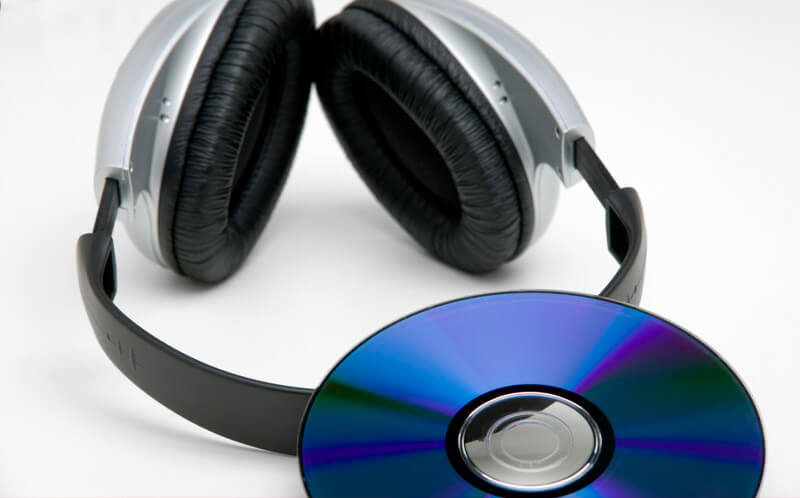
No, your ears aren't playing tricks on you. CDs can sound better than Spotify. The drums feel more present and the bass has more weight. The vocals seem clearer and the guitars have more breathing room. Is it just you or is there really some truth behind why CDs sound better than Spotify?
You're not imagining it. For casual listeners, the difference between a Spotify stream and a CD might seem subtle or not noticeable at all. Streaming is convenient, instant and portable. It's good enough for most people in most situations. But for audiophiles, musicians, producers and engineers, "good enough" isn't always good enough. These are the people who are listening for detail and depth. They're "tuned" to texture, warmth, and dynamics.
And despite all the advantages of streaming, they still collect and enjoy CDs. So what's the secret? What are they hearing that you're not? Let's pull back the curtain.
The biggest technical difference between CDs and most streaming playback
Compression is the biggest technical difference between CDs and most streaming playback. A standard audio CD contains uncompressed digital audio. That means the music is stored at CD quality without the kind of data reduction used by many streaming services. Spotify, on the other hand, is made for convenience. It needs to deliver music fast across everything from phones to laptops, to cars and inconsistent internet connections.
In order to do that, it has to compress the audio format, making smaller files easier and faster to stream. But that convenience comes with a tradeoff. Audio compression can remove or smooth out parts of an audio signal that the system assumes most listeners won't notice. That's why the listening experience on a CD feels more open and complete; it doesn't have to squeeze the music through the smallest possible delivery pipeline.
Bitrate is a big deal
Another reason why CDs sound better than Spotify is bitrate. The bitrate refers to how much audio data is transferred per second. The higher the bitrate, the more audio information can be transferred which means better sound quality and larger file sizes.
Streaming services have to balance quality and speed, along with bandwidth and convenience. The quality you hear depends on everything from the platform itself and your subscription level, to your connection and the device you're listening on or through.
CDs are a lot more straightforward. The audio is already on the disc. It doesn't have to be adjusted in order to fit a specific connection quality or setting. When it's played through decently good equipment, the listener gets the full CD-quality experience.
Streaming is designed for easy access. CDs are made to own.
Spotify changed how people listen to music because it made it more accessible. Millions of songs are now at your fingertips. You can listen to new artists, build playlists, share tracks and even have the algorithm recommend songs. That makes music accessible for millions, but it's not the same thing as actually owning the music.
Streaming is accessible and convenient, but it's also temporary and disposable. A CD asks for your attention in a different way. You can hold something tangible in your hands and read the liner notes. You experience the full album as a complete set of songs, not a one-off song recommended through a streaming app.
We'd even argue that after 80 years, physical media still offers fans greater sound quality. You can own it and enjoy it in a way that streaming can't fully recreate. A CD is the full listening experience, complete with cover art, liner notes, lyrics and photos.
What audiophiles actually hear
So what do audiophiles actually hear that streaming misses? More of the song. That can mean everything from clearer high-end details to more natural cymbals and a fuller low end. There's more dynamic contrast between the loud and quiet sections, and better stereo separation. The texture doesn't sound like it has been "smeared." It's a closer match to the actual master than what streaming can produce.
Many audiophiles will tell you that streaming compression makes music feel flatter, especially when an already-compressed file is streamed through earbuds, compressed even further through Bluetooth, played through phone speakers or listened to in a noisy environment. The differences might not be dramatic, but they do add up.
Spotify isn't bad. It's just built to do different things.
Despite the differences, we're not here to say "CD good, Spotify bad." Spotify is very useful. Streaming platforms are a great way to reach new listeners, build playlists and make your music available around the world. At Disc Makers, we've even released a complete guide on how to get your music on Spotify. In short, you generally need uncompressed files like WAV, FLAC or AIFF if you're uploading through a distributor.
That makes sure that your streaming starts from a high-quality source file. But nevertheless, the listener's experience is going to depend on things outside of your control; everything from the platform's playback system to the device you're listening on. CDs, on the other hand, give you high-fidelity quality and a true ownership experience.
The good news is that you don't have to choose one or the other. Plus, CDs don't automatically sound better because they're CDs. The master quality matters. That's why our SoundLAB offers professional mastering services for digital, CD, vinyl and even video releases. If you're ready to have your CD show off the full depth of your recording, you need a strong mix and a premium-grade master. Disc Makers can help. Get started with a project today or view pricing details on our website.
TLDR
This article explains why CDs can sometimes sound better than Spotify, focusing on differences in audio compression, bitrate, and playback systems. CDs store uncompressed audio, allowing listeners to hear more detail, dynamic range, and stereo separation compared to streaming platforms, which compress audio for efficiency and accessibility. Spotify prioritizes convenience, portability, and algorithm-driven discovery, which can slightly reduce audio fidelity depending on bitrate, subscription level, and listening device. Audiophiles and professionals often prefer CDs because they preserve more of the original master with greater clarity and depth. However, the article emphasizes that Spotify is not inferior, just designed for a different purpose: global accessibility and ease of use. Ultimately, listening experience depends on both format and mastering quality, and independent musicians benefit from understanding how both CDs and streaming impact the final sound their audience hears.