



How to choose the right CD packaging (including digipaks, jewel cases, and wallets)
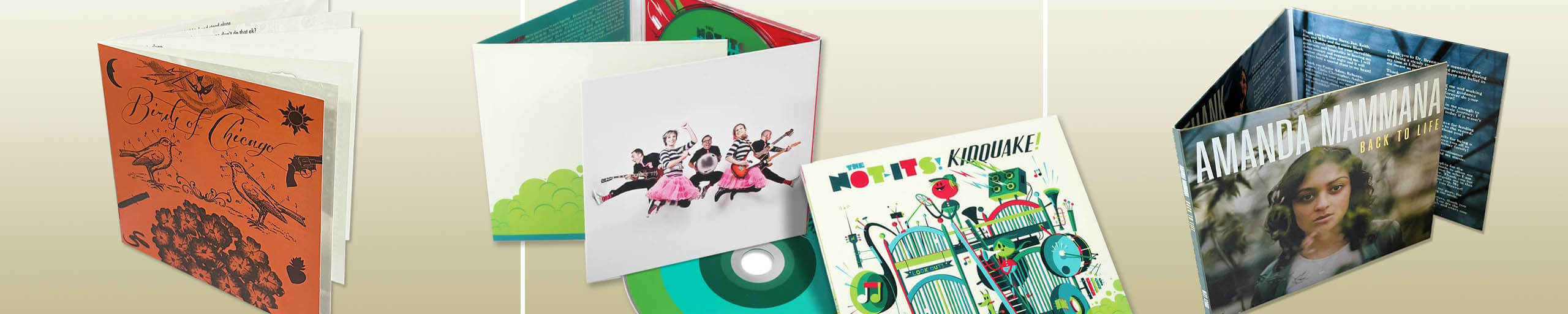
Have you ever held a CD in your hand and felt the excitement of "this is truly a treasure — something I'll keep and enjoy forever?" That's the kind of magic you want as an artist when you launch a limited-edition CD. Streaming, for all of its popularity, is infinite, but also impersonal. A limited-run disc, on the other hand, creates a connection with your fans like nothing else; like a moment just between the two of you.
In this article, we'll go through the steps of how to design a limited-edition CD that truly feels one-of-a-kind. Each decision, from packaging to printing, is your opportunity to infuse your work with deeper meaning, not to mention scarcity and value. Here's how to create something that fans will happily keep on their shelves for years to come.
Should you create a limited-edition CD in 2025 — or beyond?
Absolutely. "Limited edition" still carries a lot of weight and luxury with it, even in 2025 when streaming services are the norm. Physical media is still an excellent way to monetize your music and build a real, lasting connection with your fans.
Still, a regular CD can feel generic. A limited-edition design, on the other hand, makes your fans feel like insiders or VIPs. They own something rare — something that you invested special care in. In this way, your design choices become a part of the art, and a part of your story.
Limited editions are also great opportunities for you to experiment. Add in special things like bonus tracks, alternate artwork, or special packaging. Disc Makers lets you do this without having to overcommit to a full-scale run. Our short-run and custom replication options make what was once tedious and complex become fully possible and affordable.
In short, you're doing what streaming can't: using physical media to give your fans an experience and an item that's truly remarkable. Now, let's move on to how to actually do just that:
How to design a limited-edition CD
Designing a limited-edition CD is just as much about planning as it is about the design itself. The choices you make early on will shape everything that follows. Here is a shortlist of the questions and decisions you'll need to make:
Define your concept and audience
By deciding your run size early, you'll be adding in value through scarcity. Will you stop at 100 items, 250, 500? The choice is entirely yours. Then, ask yourself: "What makes this edition unique?" It could be anything from bonus tracks to handwritten liner notes, unique colored art, colored discs, or packaging extras like stickers or posters. Think about what your fans would love to get their hands on.
Whatever options you choose, think about your fanbase and what they care about. What do your most dedicated listeners appreciate? Are they more about design and aesthetics or sentiment and story?
Choose duplication vs. replication
Disc Makers offers both replication and duplication options. Short-run duplication is more affordable and flexible for limited editions. If your edition is sufficiently small, duplication gives you the same packaging options you'd get with replication. See the difference between CD duplication vs. replication to better acquaint yourself with the terms and what they mean.
Create a timeline with built-in buffers
At Disc Makers, we've made it even easier for you to plan ahead when it comes to mastering your work, preparing your artwork, and getting all the way through printing and shipping. Check out our DIY album release checklist and give yourself plenty of built-in buffers for proofing, revisions, and potential delays.
Designing the package
Designing the limited-edition CD package is where the real fun begins. You want to make every part of your limited-edition process feel unique and valuable, so here's how to do it.

Packaging format: your creative canvas
Your packaging choice is the first visual and tactile impression listeners will get of your work. We offer a wide range of packaging types made to suit your aesthetic and budget:
Jewel cases: Classic, familiar, and durable, jewel cases are a solid choice if you want a solid "retro style" look.
Digipaks: Premium, eco-friendly and customizable. We offer 4-panel, 6-panel, and 8-panel options with full-color printing and UV coating.
CD wallets: These board stock sleeves are minimal, lightweight, and plastic-free. They're a great way to add in extras (like inserts) without adding bulk.
If your limited-edition CD will include bonus materials like booklets, art prints, or foldouts, we recommend choosing packaging with plenty of real estate, like multi-panel digipaks, so that none of your extras feel like they were squeezed-in at the last minute.
Booklet and insert design
The booklet is your space for storytelling. It's the place where you can add lyric sheets, session notes, credits, photos, or commentary. We've got plenty of ideas for elements to include in your CD booklet if you're looking for ways to enrich the listener experience.
For example, you'll want to keep your visual theme (colors, fonts, design styles) so that it meshes with your CD cover. You don't want it to feel disjointed. At the same time, don't overload the booklet or insert with imagery or text. Don't forget to proof the work because typos or layout glitches can make the end result look amateurish (and people who paid premium prices for limited-edition goods will not be thrilled about that!)
On-disc design and silkscreen printing
When you print directly on the CD service, what you print matters. When a fan opens the case, that's where your artwork and the disc combine. We use silkscreen printing for discs, but doing so comes with a few points that you should keep in mind if you're designing your own artwork.
- Avoid very light tints (below 15%) or very dark (above 85%) as they tend to misprint.
- We recommend not using gradients or subtle blends as they don't reproduce cleanly.
- Focus on high-contrast, bold shapes. These survive the silkscreen mesh and are easier to read.
If you want to use photographs or complex graphics, we recommend restricting them to the booklet or packaging while letting more iconic-style graphic design be shown on the disc itself.
Cover and artwork finishes
Cover art is like your billboard, and with Disc Makers' digipaks, you can protect your investment even more with super-glossy UV coating to prevent scuffs from marring the surface of your case while showing off bright, vibrant color. This added coating is available for digipak orders at no extra charge, helping you save money without sacrificing style.
Add in the little extras
The little extras make your limited-edition CD truly stand out, especially if fans aren't expecting them. We're talking about things like:
- Numbered copies to tell fans that each disc is unique and that one is exclusively theirs.
- Handwritten notes, autographs, or inserts. A small card, lyric sheet, or postcard in your handwriting (even if it's digitally printed to mimic your handwriting style) makes each disc feel more personal.
- Alternate track listing or bonus tracks. A hidden track or demo version exclusive to the limited edition run makes the disc feel even more special.
- Alternate artwork or variations on covers. Making a few different versions, like different cover colors, makes fans feel like they own something distinct.
- Art prints, lyrics sheets, posters, stickers, or foldouts. They don't add much bulk, but they deepen value and increase your exposure.
Production and quality control
Design is important (and it's often the fun part of creating limited-edition CDs) but production is where execution matters. When your discs are printed and packaged, imperfections can take away from that coveted "limited edition" feel. Here's how to stay on top of production and quality control.
Use Disc Makers' templates and proofing tools
We offer design templates that include bleed, trim, and safety margins. We strongly recommend that you use our templates for your limited-edition CD print runs to help prevent imperfections. We also offer an instant digital proofing tool so you can see what the final result will look like before you approve your order.
Request mockups and proofs
Before we begin your full manufacturing run, we recommend you order physical proofs (you can also use our online proofing tool if you'd like to approve the proof digitally). Don't just briefly scan the mockup. Go through it as completely as possible, ideally as a physical proof. This lets you see and feel the material firsthand and check the color quality and fidelity to make sure it aligns with your artistic vision.
Inspect your first few units
If you request physical proofs, inspect the first few units and check things like color fidelity, registration alignment, disc printing clarity, and packaging. You'll want to make sure the artwork is properly aligned and that everything looks good before full print production begins. Don't think for one minute that true fans won't notice a slight error — they will, and that can mar the appearance of a limited edition, not to mention the premium price tag that goes with it.
Watch out for silkscreen printing pitfalls
Disc printing can be tricky. Because silkscreen involves mesh and layering, repeated color over transparent zones or near edges can be prone to looking different than you might expect. Fine text or thin lines might blur or disappear, so check the silkscreen quality carefully.
Shipping and packaging protection
At Disc Makers, we offer several built-in packaging and protective measures designed to minimize damage in shipping. Our digipaks provide ideal protection by preventing scratching or scuffs during storage and transport of your discs. Meanwhile, our CD wallets are printed on durable 18-point or 15-point board stock, then finished with a UV coating that helps resist scuffs.
We also include retail-ready poly wrap for CD wallets. This protects your CD wallet with plastic wrap to guard against surface damage during shipping and handling. We also sell resealable poly bags (cellophane wrap bags) for CD cases, designed to give your discs a professional, retail-ready look while protecting the product from scratches.
For shipping purposes, we have a variety of packaging and mailing supplies, including mailers, sleeves, and packaging designed for mailing CDs and DVDs.
Pricing, marketing, and your launch strategy
So far, we've spent a lot of time talking about the design and printing process of your limited-edition CDs. But what about pricing and marketing? A stellar limited-edition design deserves a phenomenal launch. Here's what we recommend to make your disc stand out.
Price like you mean it
Premium editions need to be priced accordingly. Charge a premium over your standard CD price. The extras plus the scarcity justify the increased price. You can also consider offering tiers, like standard vs. deluxe editions, so that your fans have more choices. Be transparent about how many of the limited-edition CDs were made so that scarcity is woven in as part of the appeal.
Marketing strategies that work
There are lots of marketing strategies that can help you spread the word and make sure your limited-edition CD truly feels limited and unique. For instance, you can:
- Drop sneak peeks of cover art, packaging mockups, or design features on your socials.
- Share behind-the-scenes stories, such as your design process or even the proofs. Fans love getting an inside glimpse at your creative world.
- Take preorders before moving ahead to a full print run and close them once you reach your limit.
- Show how many are left via a countdown number.
- Bundle offers, such as pairing your limited-edition CD with another exclusive like a poster, vinyl, or digital bonus.
When and how to release
It's a good idea to choose a release date for your limited-edition CD that holds some special significance for you, such as an anniversary, tour kickoff, and so on. Then, coordinate your physical release with digital drops. You may even want to restrict digital access until all the physical editions are sold out, which makes the CD feel even more valuable. Launch day bonuses are also a coveted item. For example, the first 10 orders get signed lyric sheets.
Common pitfalls to watch out for
Given that this is a limited-edition run, you want to do everything you can to help make sure your project goes flawlessly. Here's what to watch for:
Overdesign
It's easy to get carried away with "special edition" ideas. Throw in multiple bonus inserts, alternate covers, extra foldouts, etc. But the more you add, the more complex production becomes. The more complex production becomes, the greater your risk of production delays or quality inconsistencies between units. It's critically important while designing to ask yourself:
- Does this actually enhance the fan experience, or is it purely for aesthetics?
- Will the feature I want to add survive repeated handling, shipping, and storage?
Ignoring printing constraints
Every printing method has limitations, and trying to push the boundaries rarely ends up going the way you'd think. Silkscreen printing, for example, doesn't handle fine gradients, microscopic details, or soft color transitions well. Things like ink density, line weight, and registration tolerance all play a role in how well the silkscreened result looks.
Ignore those points and risk having your beautiful concept art looking like a muddy blur. For this reason, we highly recommend using our artwork templates, and following the specs exactly. Keep text and artwork away from cut lines, avoid using ultra-thin fonts, and don't rely on subtle fades as they can get muddled. By following these guidelines, you'll have a much sharper, cleaner, and more consistent run with beautiful results you can count on.
Poor proofing
Don't think of proofing as an optional step. Even a one-millimeter shift in alignment or a small color difference can ruin the aesthetic of your design. And if you can spot the flaw instantly, you can bet that fans will, too. Always request digital proofs (and physical ones when possible) before your work goes into full production.
Carefully check bleeds, trims, and spine text. Look at the color balance and how legible the text is under normal lighting conditions — not just on a backlit screen. Taking the time to carefully proof your CD can save hundreds of dollars in reworks, not to mention print delays.
Underestimating shipping damage
We'd all like to think that our limited-edition items are handled with the care and consideration they deserve, but sadly that's not always the case. While shrink-wrap and sturdy board stocks help, they're not completely destruction-proof. Long-distance shipping, stacking, and warehouse handling can scuff services, bend corners, and crack trays.
This is why we recommend choosing packaging with built-in rigidity, like digipaks, CD wallets, or even boxed sets, and use protective inner sleeves for discs. This way, your disc will showcase all the premium care that went into creating it, the moment it reaches your fans' hands.
Lack of scarcity control
Nothing causes collector excitement to hit rock bottom like finding out that "limited edition" copies reappear months later. If you're going to commit to a numbered, limited run, make it final.
With Disc Makers, you can easily store your masters for future use, but we recommend deciding before launch whether or not reprints will ever happen. If you do plan a second run, make it visually different in some way, such as alternate art, or a mark that reads "second pressing." Collectors buy your limited editions because they're authentic and scarce, and it's up to you to respect that.
Getting started with limited-edition CD design at Disc Makers
Designing a limited-edition CD that truly feels unique is one of the most deeply moving ways that you as an artist can give your fans back something special for all the care and love they've given you. Every decision you make when creating a limited-edition CD design builds on your story. From the disc color, to the cover finish, to even the number of panels on the insert booklet — all of it tells a story and shapes your next steps as a musician. When it's done right, limited-edition CDs are one of the few things that go from being a vehicle for music, to a cherished keepsake.
The good news is that Disc Makers has worked with artists and musicians since 1946, helping to create lasting, memorable works of art that listeners treasure. With our online design and proofing services, it's easier than ever to get started. Go to DiscMakers.com and choose the packaging format that best fits your needs and budget for your limited edition runs. Download the design templates and start sketching out the concept art for your limited-edition CD.
Take the time to refine and polish the end result so that the moment your fans hold that disc, they'll know they're holding onto something that only you could've made, and the team at Disc Makers is here to help you see it through as a reality they'll never want to trade away. Get started today with a free quote!