



Vinyl pressing for independent artists: from mastering to finished records
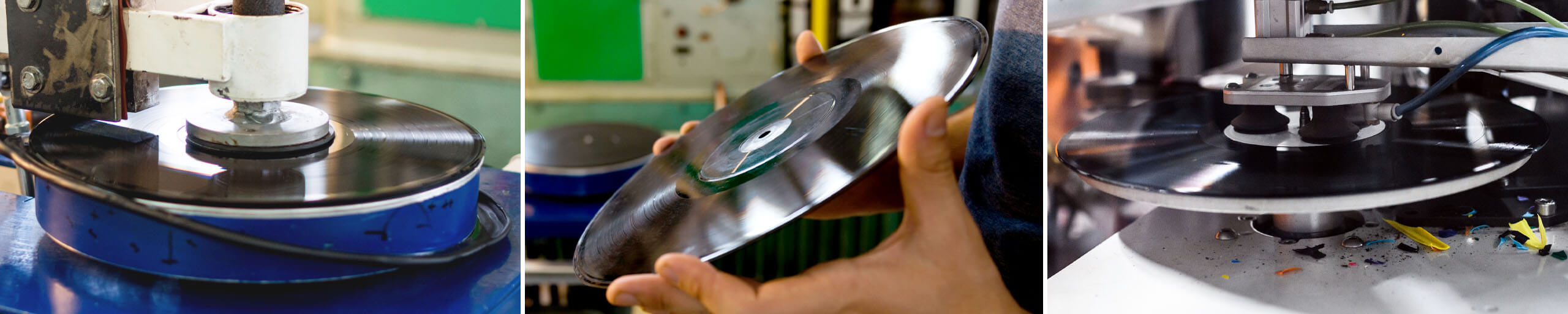
Classics are in demand again, and nowhere is that more evident than in the embrace of vinyl. The best part is that you don't need the backing of a huge record label or a warehouse full of gear to make vinyl happen for your launch. With Disc Makers as your printing partner, independent artists can now take a project from the first master to boxed, shrink-wrapped records complete with professional jackets, labels, and finishes, all starting at just 100 units.
From getting your master ready to polishing up your last steps, here's how vinyl pressing works for independent artists, and how our vinyl-savvy experts make it happen.
Getting started with a vinyl-ready master
The first step in getting great-sounding vinyl is mastering. Mastering vinyl must respect the physics of the stylus riding the groove. The SoundLAB at Disc Makers is our professional mastering service specifically designed to deliver masters crafted for CDs, digital, and vinyl. Before you even start, you can get a free quote and learn more about the engineering process and the people behind it, as well as the gear we use.
Do you need a file that's specifically mastered for vinyl? We highly recommend it. Low frequencies under ~150 Hz should ideally be summed toward mono to reduce stylus stress. Harsh highs and sibilance should be tamed and over-compression/brick wall limiting should be avoided so the record can "breathe." Taking points like this into consideration is something you learn only after years of experience, and that's where our SoundLAB engineers shine.
To deliver your file, we recommend 24-bit WAV at higher sample rates (like 96 kHz) where possible. We accept other formats as well, but we strongly discourage compressed sources. If you're uploading track by track, our help center lists out accepted formats and sample rates/bit depth as well as where to upload them in your account.
Mapping out your program length and choosing the right RPM
Vinyl has hard limits. Longer sides mean lower levels and tighter grooves. For this reason we publish both "optimal" and "maximum" program lengths based on format and speed. For example, 45 RPM buys fidelity at the expense of runtime.
We recommend keeping a 12" 33 ⅓ RPM side to around 15-18 minutes for the best possible quality, while a 12" 45 RPM side runs around 9 minutes optimally (and 13 minutes at the most). If you're curious as to why runtime affects loudness and distortion, our blog digs into the details when it comes to groove spacing, overcuts, and why inner grooves are less forgiving. This can help you map out your program length and make sure that every song hits all the right notes.
How to prepare your assets (and where they go in the project flow)
In order to get the best possible vinyl pressing, we spell out exactly how to prepare your assets.
A/B side designations and time logs
Those tiny "bands" between songs aren't just there for looks; they're instructions that translate to visible gaps on the lacquer itself. Having a detailed time log with track lengths and bands is crucial for both cutting and QC.
Uploading your audio
In your saved quote, you'll pick the content type and upload individual audio files (or a single file per side). You'll then enter ISRCs/CD-Text (as needed) and preview everything to make sure it looks good. You can find the step-by-step uploader in your account.
Artwork templates and specs
We highly recommend using our vinyl templates, including labels, jackets, gatefolds, and inner sleeves, to make sure that bleeds, safe areas, and spines land where they should. Be sure to check out our jacket and label print specifications for all the print details, coating defaults, inner sleeve options, and label stock.

Moving from master to metal: cutting and plating
Once the audio and assets are approved, we move onto the "mastering" that makes the grooves. This process is called cutting. We have two methods of cutting here at Disc Makers. The first is lacquer cutting, where grooves are cut into lacquer-coated aluminum ("acetate"). Lacquer that is cut in this way makes it possible to have deeper cuts and a higher output level.
We also have DMM or direct metal mastering. This is where grooves are cut into copper. The sound is a little more crisp due to the hardness of copper, and the cuts are generally shallower, which makes for a slightly lower output.
At this stage, the cutting engineer might make minor EQ and level decisions in order to produce the best-sounding side depending on your length and type of content. It's important to note that you can't outright choose the cutting method. Instead, it's chosen based on your package and production constraints.
After cutting, the master is then electroplated to create the metal parts that press your records. If you'd like to learn more about the process, why test pressings are important and why recuts are sometimes necessary, check out this article.
Test pressings: what they are and how to review them
If your project includes test pressings, we'll send you five of them. Test pressings are for you to check that the audio master and plating translate cleanly and that there are no systemic defects before your vinyl pressing run goes into full production. When evaluating a test pressing, we strongly recommend that you:
- Use decent playback, such as a properly weighted tonearm and speed-accurate turntable
- Clean dust from the grooves. Too much buildup can create pops and clicks.
If you notice a defect on one but not the others, it's a fluke, not a stamper issue. There's a significant fee involved if the errors come from the supplied master and require new test pressings. That's because the process involves remastering, replating and repressing test copies.
It's important to note that many suitcase-style and other low-quality turntables can cause speed inconsistency, problems in tracking force, and wow/flutter. These are issues with the player itself and not the record.
Pressing choices, colors, and formats
Choosing the right weight, color, and format can seem like small decisions, but they add up to a big perception of your sound when done right. Here's what to know about your pressing choices, colors, and formats when working with Disc Makers vinyl pressing.
Choosing 140 g vs. 180 g weight
We press standard 140 g and deluxe 180 g 12" records. One popular myth spread among audiophiles is that 180 g is somehow inherently better sounding under typical conditions. We hate to burst your bubble, but the streamers and groove depths are the same. Heavier records feel more premium, and yes, their extra mass can slightly dampen the micro-movements on high-end systems, but on most rigs, what you hear is a negligible difference at best.
With that being said, if you're marketing to audiophiles who demand premium quality, go with 180 g, otherwise, 140 g is a more affordable option that's still high quality.
Colored or black vinyl?
Black vinyl tends to offer the lowest surface noise. Colored, marbled, and other splattered options look great and can be very quiet, but the surface noise can be higher depending on how they're formulated. If you're worried about noise, black is the safest choice. If visual impact matters more, take a look at our color catalog to see what's possible.
Which format to choose and what to include
On our 12" vinyl product page, we show what a standard LP package includes:
- Lacquer mastering
- 140 g or 180 g pressing
- Full-color labels
- Plain white inner sleeves (custom printed sleeves are also available)
- Insertion and shrink wrap
We also offer gatefolds and wide spines, and our finish options include super-shiny gloss UV, matte, and aqueous. Our 7" vinyl products offer similar options for singles.
Jackets, labels, and finishes
People say not to judge a book by its cover, but they definitely judge a record. For that reason, we make it easy for you to make a stylish first impression.
Jacket styles
We offer several jacket styles, including:
- Euro (no spine, budget-friendly)
- Standard (with spine, 18-20 pt board)
- Gatefold (double-panel, pockets vary depending on 7" or 12" size)
Our jacket and label specs page goes into more detail about how the pockets are laid out, as well as the weight of the stock. If you're weighing the differences between Euro vs. Standard vs. Gatefold for your album debut, we've got tips on how to choose the right vinyl option for your needs.
Wholesale jackets
If you're ordering jackets separately or you're a record label, you'll be glad to know that Disc Makers also prints record jackets for manufacturers with fast turnaround times and UV/matte/aqueous options. These make fantastic options for reordering or special editions.
Finishes
We offer three premium finishes for jackets:
- Gloss UV - high shine and eye-catching color
- Matte UV - silky smooth and resistant to fingerprints and scuffs
- Semi-gloss aqueous - a water-based satin
Browse our website for recent articles on the different types of jacket coatings, as well as tips for how to choose the one that's best for your unique needs.
Turn times and quantities
Now let's move into the most common questions we receive from independent artists who are looking for vinyl pressing: "How long does it take and how many should I order?" Vinyl pressing is an industrial process. The setup costs for mastering, plating, and pressing make it impractical to do a single run. For this reason, we don't press fewer than 100 units.
Our vinyl production turn times page lists our current estimates. You'll see ranges (in weeks) for 12" and 7" pressings both with and without test pressings. Be sure to check these estimates often, as our turn times vary depending on the season and our current capacity. That pricing page reflects the very latest timeframe.
If you're adding SoundLAB mastering, add 3-5 days for that step prior to manufacturing, plus any additional time you need to approve proofs. This way, you're not rushed when it comes time to approve the most vital part of the vinyl pressing process.
Single or double LPs?
For modern albums that go beyond vinyl's comfortable single-LP runtime, we recommend that artists consider double LPs. These include:
- Lacquer mastering
- 140 g pressings (optionally upgradeable to 180 g)
- Gloss UV jackets
- White inner sleeves
With double LPs, gatefold jackets can also be positioned for maximum impact. This is a great way to enhance the perceived value of your vinyl and pave the way for proper groove spacing which all adds up to better sound.
What's included when you order with Disc Makers?
A big part of choosing Disc Makers for your vinyl pressing needs is all of the small stuff you won't want to worry about when it gets closer to your launch date. Our standard packages include:
- Lacquer mastering
- Pressed records (140 g or 180 g)
- Full-color labels
- Insertion into inner sleeves
- Shrink-wrapping
This makes sure they arrive retail-ready for stores, online orders, and merch tables. Wide spines and gatefolds are also available, as are custom-printed inner sleeves.
Should you go with colored vinyl?
We've talked about the many colored vinyl options available in our catalog. However, oftentimes, independent artists wonder if they should make the leap. If colored vinyl is a question that you've been mulling over, do what many of our artists do: black vinyl for a main run, and then a colored version as a limited run!
Preparing your files right (the first time!)
A big part of vinyl pressing is preparing your files so that everything gets submitted right the first time. That means taking the time and care to get all your files and logs ready to go as smoothly as possible. For audio, upload only accepted file types and avoid lossy sources. If you're sending one file per side, email us a track list with the length of each track.
Don't forget to designate A and B sides in your account and when placing your songs (keep inner-groove limitations in mind). Taking the time to get this right when preparing your files can not only save you delays, but also costly reworks!
What's happening behind the scenes?
Knowing what's happening behind the scenes with your vinyl pressing is important. Although it might seem like just something that's "nice to understand," going beyond the basics and knowing how our process works can help you make more informed decisions with your vinyl pressing. Here's what we're doing:
First, we're cutting. This involves translating your audio into a physical spiral. Depending on the package you order and the capacity, we may use either lacquer or DMM. Our sound engineers made minor adjustments to give you the best-possible results for your program length.
From there, we move to plating, which creates the metal parts, including father/mother stampers that will press thousands of consistent vinyl copies. If you've ordered test pressings, that will be your checkpoint before things move on. Keep in mind that creating test pressings will add to the deliverable timeframe.
Finally, we move on to pressing and finishing, which involves pressing to your chosen weight and color, applying labels, inserting the records into sleeves, and shrink-wrapping them.
The main pages for our vinyl products also detail exactly what's included, what options are available, and more.
Should you add SoundLAB mastering?
While you can supply your own final master, we highly recommend using a vinyl-specific mastering house like The SoundLAB. Our experienced engineers can match track levels and balance tone across an entire album. We also have rooms specifically designed to monitor levels and translations, and a process that keeps in mind the compromises of cutting. Our pricing for SoundLAB services is transparent, and turnaround times are fast enough to bake into your release plan without upending your entire schedule.
Getting started with vinyl pressing as an independent artist
Releasing your music on vinyl is an excellent way to build a lasting connection between your music and art and the people who support you. Streams can disappear easily thanks to endless scrolling and algorithms, but a record endures like nothing else. It spins on turntables, it sits on shelves, and every time someone holds the jacket, it tells your story.
In this guide, we've walked you through the process involved in going from mastering to finished copies. We've helped you understand what you need to know about program length and sequencing, as well as how to prepare your files and assets correctly. We've walked you through the importance of test pressings and how to choose different weights, colors, and jacket printing styles. All of these things matter because every single detail, from the EQ balance to the coating on the jacket, will affect how fans see, hear, and remember your work.
At Disc Makers, we've made vinyl pressing affordable and easy for independent artists by bringing all the services you need together under one roof. With SoundLAB mastering by experienced sound engineers, we make sure your unique sound translates to vinyl. Our guidelines help you sidestep expensive delays, and when you're ready to press, you'll know exactly what you're getting.
Thanks to our minimum run of 100 records, vinyl is now more accessible than ever. If you choose to scale up to 500 or 1,000 units, you pave the way for considerable profits, even after you count the costs involved in mastering, plating, packaging, and shipping. Plus, with add-ons like colored vinyl, custom printed inner sleeves, and gatefold jackets, you can add as much visual impact as your budget will allow while still maintaining the brand that is uniquely you.
As you plan your release, keep in mind that pressing vinyl isn't about competing with major labels. With Disc Makers, you're creating something that your fans can own, share, and cherish. When vinyl pressing is done right, it creates a kind of deep and serious credibility that shows that you're an artist who takes their craft seriously.
Plus, because you're backed by a professional printing house, you'll know the work is done right. Our detailed FAQs, downloadable templates, free quotes, transparent pricing, and in-house printing keeps things affordable and the quality consistent.
Remember that vinyl records aren't just a piece of nostalgia, and they're not simply groves etched into wax. With vinyl pressing, you're making your mark. You're releasing a record that truly represents you and your style. And with Disc Makers guiding you step by step through the process, you can be sure that your music isn't just heard, it's remembered, word after word, song after song.
Ready to take the next step and get started with vinyl pressing for your own creations? Get a free quote or create an account today and reach out to us with any questions you may have. We're ready to help you take your next steps with confidence!